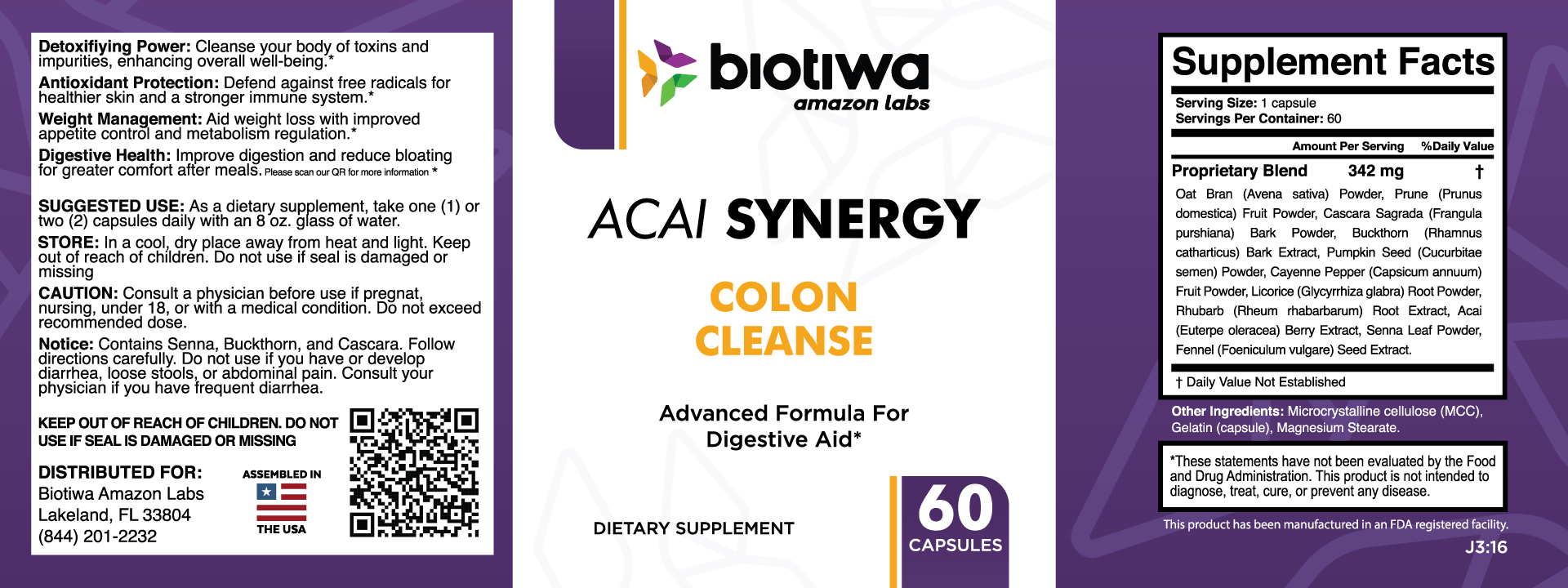
Açai Synergy 🫐: Natural Support for Your Daily Wellness.

Feel lighter, more balanced, and ready to take on the day. Acai Synergy is a amazonian-based formula that supports your digestive health and daily vitality—naturally and gently. Discover a new rhythm of well-being with every capsule.

Why Is Açai Synergy Perfect for You?

Smart Weight Management

Acai Synergy is designed to help you shed unwanted pounds naturally. Its Amazonian bioactive ingredients work to accelerate your metabolism, reduce bloating, and target stubborn fat, all while maintaining your overall health.

Restores Gut Health

Packed with fiber and powerful nutrients, Acai Synergy helps balance your gut flora, improving digestion and nutrient absorption. This not only enhances your digestive health but also boosts your immune system and reduces discomfort caused by bloating.

Harnesses the Wonders of Nature

Acai Synergy is inspired by the vibrant ecosystems of the Amazon and beyond. Made with carefully selected, sustainable ingredients from around the world, it delivers the power of natural bioactives to support your body from the inside out. Experience a health routine that celebrates the diversity and vitality of nature.

Boosts Energy and Vitality

Acai Synergy is packed with antioxidants and essential nutrients that support your body's overall health. While it doesn't directly boost energy, it enhances nutrient absorption, which can help you feel revitalized and reduce fatigue over time. Enjoy the benefits throughout your day, whether it's for work, exercise, or spending quality time with loved ones.


The Amazon’s Pure Power, Delivered to You

Acai Synergy combines the unmatched bioactive richness of the Amazon rainforest with a global blend of natural plants. Our premium ingredients, sustainably sourced from various ecosystems, work in harmony to offer you nature’s most potent benefits. With every dose, you support not only your health but also the preservation of the Amazon and its communities.

Key Ingredients in Açai Synergy

Açaí Berry Extract:

Rich in antioxidants to combat free radicals.

Buckthorn Bark Extract:

Supports digestive health and detoxification.

Cascara Sagrada Bark Powder:

Promotes healthy bowel movements.

Cayenne Pepper Fruit Powder

Boosts metabolism and supports circulation.

Fennel Seed Extract: 

Aids digestion and reduces bloating.

Licorice Root Powder: 

Helps maintain gut health and soothes digestion.

Oat Bran Powder

High in fiber to support gut flora.

Prune Fruit Powder: 

Natural source of fiber for improved digestion.

Pumpkin Seed Powder: 

Rich in magnesium and nutrients for overall health.

Rhubarb Root Extract:

Supports a gentle detox process.

Senna Leaf Powder:

 A natural laxative for effective colon cleansing.

How Does It Work?

Acai Synergy harnesses the unmatched bioactive richness of the Amazon rainforest. Our premium ingredients are sustainably sourced from this vibrant ecosystem, ensuring you experience nature’s most potent benefits. With every dose, you support not only your health but also the preservation of the Amazon and its communities.

Loved by Those Who’ve Tried It

Gut Health: The Core of Your Well-being, Supported by Science!

Article Descriptions:

1. Psychopathological Characteristics in Patients with Digestive Problems:

This study highlights the strong association between gastrointestinal issues and mental health, showing that patients with digestive problems exhibit higher levels of depression, anxiety, and other mental disorders compared to healthy individuals.

2. Gastrointestinal Motility Function and Dysfunction:

The effects of aging on gastrointestinal motility, emphasizing that altered motility can lead to conditions like constipation and fecal incontinence. It underscores the importance of maintaining gut health to prevent these issues

3. Gastrointestinal Issues in Depression, Anxiety, and Neurodegenerative Diseases: A Systematic Review on Pathways and Clinical Targets Implication

Multiple illnesses commonly involve both the Central Nervous System (CNS) and the Gastrointestinal Tract (GI) simultaneously. Consistent evidence suggests that neurological disorders impair GI tract function and worsen the symptomatology and pathophysiology of digestive disorders

Certified Quality You Can Trust
At Biotiwa, we deliver high-quality, safe, and sustainable products. Crafted with natural, plant-based ingredients, Açaí Synergy is manufactured in a facility registered with the FDA and adheres to strict GMP standards, ensuring consistent quality. As a Non-GMO Project Verified supplement, it offers a natural approach to health. Our eco-friendly practices and responsible sourcing minimize environmental impact, while every purchase supports social and environmental initiatives. Proudly made in the USA, Açaí Synergy embodies trust, sustainability, and meaningful change—more than a supplement, it’s a commitment to better health and a better planet.

TAKE ADVANTAGE OF LIMITED-TIME SPECIAL OFFERS

1 unit for $26.24

2 units for $49.80
6 units for $136,44
Money Back Guarantee
When you purchase any kit, you are automatically enrolled in the Acai Synergy Challenge. If you don’t see visible and satisfactory results within 90 days, we will refund 100% of your money.
Frequently Asked Questions (FAQ)
What is Acai Synergy, and how does it work?
Açaí Synergy is a natural supplement made with Amazonian bioactive ingredients designed to support weight loss, improve gut health, and boost energy. It works by cleansing toxins, enhancing digestion, and promoting a healthy metabolism.
Acai Synergy is formulated for adults looking to lose weight, improve digestion, and enhance overall health and vitality. If you’re pregnant, nursing, under 18, or have a medical condition, consult your doctor before use.
Take 1-2 capsules daily with a full glass of water (8 oz). Consistency is key to achieving the best results.
Most users notice initial benefits, such as reduced bloating and increased energy, within the first week. Significant results, like improved digestion and weight loss, typically appear after consistent use for 4-6 weeks.

FDA Disclaimer

All content and information found on this page are for informational purposes only and are not intended to diagnose, treat, cure or prevent any disease. The FDA hasn't evaluated the statements provided on this page. Make sure you consult with a licensed doctor before taking any supplement or making any changes to your diet or exercise plan. Individual results may vary. The display of third-party trademarks and trade names on this site does not necessarily indicate any affiliation or endorsements of our website. If you click a merchant link and buy a product or service on their website, we may be paid a fee by the merchant.

Biotiwa Amazon Labs. All rights reserved 2024.
1. Psychopathological Characteristics in Patients with Digestive Problems:

https://www.opastpublishers.com/peer-review/psychopathological-characteristics-in-patients-with-digestive-problems-a-comparative-analysis-with-a-healthy-control-gro-6296.html

Javanmard, G. H., & Javanmard, S. (2023). Psychopathological Characteristics in Patients with Digestive Problems: A Comparative Analysis with a Healthy Control Group. Journal of Anesthesia & Pain Medicine, 8(5), 212-218.

Introduction: This study aimed to compare the psychopathological characteristics of patients with digestive (gastrointestinal) problems with those of a healthy control group. 

Methods: A total of 70 patients with gastrointestinal issues were referred to the gastroenterology department, and 70 healthy individuals were included in the study. Both groups completed the 90-question mental health questionnaire (SCL-90-R).

Results: The results demonstrated significantly higher average scores in the patients’ group across various scales, including depression, aggression, somatization, sensitivity in social relationships, obsession, anxiety, phobia, and psychotic symptoms. Overall, the group with digestive problems exhibited more symptoms associated with these eight mental disorders than the healthy control group. However, there were no notable differences between the two groups, except for the presence of paranoid ideations as a distinguishing characteristic.

Conclusions: This research unequivocally establishes a strong association between gastrointestinal issues and mental well-being, highlighting the influence of digestive system functioning on mental health. These findings contribute to a deeper understanding of the psychopathological aspects related to gastrointestinal condition

2. Gastrointestinal Motility Function and Dysfunction:

https://karger.com/vis/article-abstract/40/6/325/916641/Gastrointestinal-Motility-Function-and-Dysfunction?redirectedFrom=fulltext

Patejdl, R. (2024). Gastrointestinal Motility Function and Dysfunction in the Elderly Patient: What Are the Effects of Aging?. Visceral Medicine, 40(6), 324-329.

Background: The prevalence of neurogastroenterological diseases, i.e., disorders of gut brain interaction, has increased over the last decades. Altered gastrointestinal (GI) motility is a key feature of this group of diseases and is affecting all anatomical segments of the GI tract, ranging from swallowing disorders to fecal incontinence. Considering the ongoing demographic transformation in developed countries worldwide, it is highly relevant to understand the age-dependency of motility disorders per se and its pathophysiological mechanisms with a special focus on neurodegeneration. This review summarizes the most relevant findings and open research questions in the field of age-dependent changes in GI motility with a strong focus on studies performed on humans or with biological material obtained from humans.

Summary: While the basic function of the GI tract including motility in most of its segments is largely unaltered by aging per se, there is clear evidence supporting an age-dependent increase in the prevalence of constipation and fecal incontinence, the latter mainly affecting women. When, however, the large percentage of elderly patients suffering from frequent chronic diseases such as diabetes, Parkinson’s disease, or cerebrovascular disease are included, a clear increase in “secondary” motility disorders also affecting the esophagus or the stomach is evident. Studies regarding the pathophysiology of geriatric dysmotility are often limited by the heterogenous clinical history of the studied patients and by coincident impairments of interoceptive sensory function. However, a loss in the number of cholinergic neurons together with changes in the number of interstitial cells of Cajal, certain subtypes of enteric glia, changes in immune cell function, and changes in the endocrine signaling throughout the GI tract have been reported.

Key Messages: The overall prevalence of swallowing disorders, impaired gastric emptying, constipation and fecal incontinence is high among elderly patients. The pathophysiology most likely includes a variety of factors ranging from degeneration of enteric neurons and the non-neuronal cell populations involved in GI motility up to age-dependent metabolic and neuroendocrine changes and dietary factors. Deciphering the effects of “healthy aging” but also of the numerous typical chronic diseases of the elderly on GI motility is an ongoing challenge and prerequisite for improving patients’ medical care and quality of life. 

3. Gastrointestinal Issues in Depression, Anxiety, and Neurodegenerative Diseases: A Systematic Review on Pathways and Clinical Targets Implication

https://www.benthamdirect.com/content/journals/cnsnddt/10.2174/0118715273289138240306050532

Andriolo, I. R., Longo, B., de Melo, D. M., de Souza, M. M., Prediger, R. D., & da Silva, L. M. (2024). Gastrointestinal issues in depression, anxiety, and neurodegenerative diseases: A systematic review on pathways and clinical targets implications. CNS & Neurological Disorders-Drug Targets-CNS & Neurological Disorders), 23(11), 1371-1391.

Introduction: Multiple illnesses commonly involve both the Central Nervous System (CNS) and the Gastrointestinal Tract (GI) simultaneously. Consistent evidence suggests that neurological disorders impair GI tract function and worsen the symptomatology and pathophysiology of digestive disorders. On the other hand, it has been proposed that early functional changes in the GI tract contribute to the genesis of several CNS illnesses. Additionally, the role played by the gut in these diseases can be seen as a paradigm for how the gut and the brain interact.

Methods: We mentioned significant GI symptoms and discussed how the GI tract affects central nervous system illnesses, including depression, anxiety, Alzheimer’s disease, and Parkinson’s disease in this study. We also explored potential pathophysiological underpinnings and novel targets for the creation of future therapies targeted at gut-brain connections.

Results & Discussion: In this situation, modulating the gut microbiota through the administration of fecal microbiota transplants or probiotics may represent a new therapeutic option for this population, not only to treat GI problems but also behavioral problems, given the role that dysbiosis and leaky gut play in many neurological disorders.

Conclusion: Accurate diagnosis and treatment of co-existing illnesses also require coordination between psychiatrists, neurologists, gastroenterologists, and other specialties, as well as a thorough history and thorough physical examination.